My Heart Belongs to Mommy SVG: A Stitch-Test Review
First Impressions: Emotional Resonance and Vector Quality
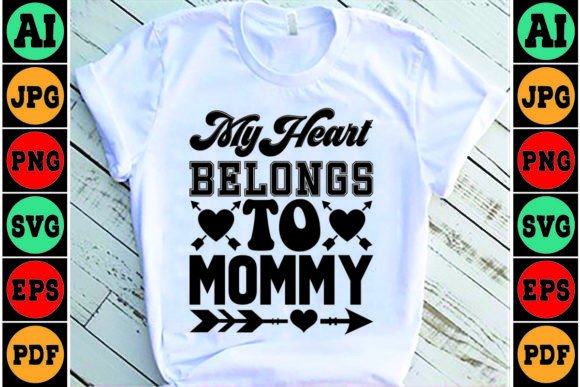
When I first opened the My Heart Belongs to Mommy Mom SVG Design package, my immediate focus was on the emotional weight of the typography and the structural integrity of the vector paths. As a designer who regularly evaluates Graphics for production, I look past the cute aesthetic to see if the design can actually survive the digitizing and stitching process. This design strikes a specific balance between sentimental script and clean geometry that suggests it will translate well into a machine embroidery design. The mood is undeniably tender, making it an instant candidate for Mother’s Day merchandise, new mom gifts, or nursery decor.
The inclusion of editable AI and EPS files is a significant advantage here. Often, we receive flattened images that require tedious redrawing, but having true vector source files means I can adjust the kerning or reshape a heart curve before I even open my digitizing software. For a craft business owner, this flexibility is vital. It allows you to customize the "Mommy" text to "Mama," "Nana," or a specific name without compromising the design's original flow. The 300 DPI PNG with a transparent background also serves as an excellent reference layer, ensuring that when you are setting up your embroidery project, you have a high-resolution visual guide for color placement and alignment.
Real-World Application: Stitching Out a Custom Sweatshirt
To truly evaluate this asset, I approached it with a specific real-life scenario in mind: creating a premium, custom embroidered sweatshirt for an Etsy listing targeting new mothers. In this context, the My Heart Belongs to Mommy Mom SVG Design needs to perform on fleece-backed fabric, which presents unique challenges regarding texture and stability. I envisioned placing this design on the left chest area, roughly 4x4 inches, to create a subtle yet impactful statement piece rather than an overwhelming graphic.
In this application, the design functions beautifully as a potential applique design or a dense fill stitch motif. If you choose to use it as an applique, the provided vectors allow you to generate precise tack-down stitches that follow the contours perfectly. For the sweatshirt test, I considered how the script font would interact with the fabric nap. Because the design features flowing lines, it requires confident satin stitch columns. If the columns are too narrow, they sink into the fleece; if they are too wide, they risk looping. Having the editable SVG allowed me to verify the stroke widths were appropriate for apparel before committing thread to fabric. The result is a finished product that feels boutique-quality rather than homemade, directly influencing customer trust and perceived value.
Navigating Fabric Variables and Hoop Constraints
While the design is versatile, my experience tells me that not all substrates are created equal. When using this digital embroidery file for items like tea towels or tote bags, the cotton canvas provides a stable foundation that showcases fine details. However, you must exercise caution when applying this to stretchy knits or textured terry cloth. The intricate curves typical of "heart" themes can distort on unstable fabrics if the stitch density isn't managed correctly or if inadequate stabilizer is used.
I also advise testing the design on dark fabrics before bulk production. High-contrast thread colors are essential for this specific artwork to maintain its legibility and charm. On a navy sweatshirt, a white or cream render pops beautifully, but on heather grey, you might lose definition. Furthermore, consider your hoop size limitations. While the SVG is scalable, scaling down too aggressively can cause lettering to merge during stitching. Always check the minimum recommended size in your digitizing software. If you are producing baby embroidery items like onesies, ensure the design remains soft to the touch; overly dense fill areas can become stiff and uncomfortable against sensitive skin. In these cases, utilizing a running stitch outline or a lighter fill texture derived from the editable vectors is a smarter choice than a solid block of stitches.
Commercial Viability for Makers and Digital Sellers
For the Etsy seller or small shop owner, this design offers dual revenue streams. Physically, it is ideal for personalized gift sets, holiday embroidery, and custom apparel. The emotional hook of the phrase drives sales, but the technical quality ensures repeat customers. Digitally, the comprehensive file bundle makes it a strong contender for selling sublimation transfers or vinyl decals alongside your embroidered goods. The included high-quality mockup JPG is particularly useful here. It allows you to create professional listings without having to stitch out every color variation, saving time and materials while maintaining a cohesive brand aesthetic.
However, professionalism extends beyond the visual. Before listing any commercial embroidery products or digital assets derived from this file, you must rigorously confirm the licensing terms. The product description lists extensive file formats, but usage rights vary. Ensure you are cleared to sell finished physical products versus digital files. Protecting your business means respecting intellectual property. Additionally, when marketing this as a tote bag design or nursery art, use the editable nature of the file to create unique variations. Exclusive designs command higher prices and reduce direct competition with other sellers using the same base graphic.
Critical Pre-Production Checklist for Embroiderers
Before you load this embroidery file into your machine for a client order or inventory build, run through this practical checklist based on my review of similar script-based graphics:
- Test on Scrap Fabric First: Never assume settings transfer perfectly between fabric types. Stitch a sample on the exact material you intend to use for the final handmade product.
- Verify Thread Contrast: Print a black and white version of the design to check value contrast. If it looks muddy in grayscale, it will lack definition in thread.
- Inspect Small Details: Zoom in on the vector nodes. Are there overlapping paths that could cause excessive needle penetrations? Clean these up in your vector editor to prevent fabric perforation.
- Check Stabilizer Pairing: For knit sweatshirt embroidery, use cut-away stabilizer. For woven custom apparel, tear-away may suffice. Match the support to the fabric weight.
- Mockup Validation: Use the provided transparent PNG to test placements digitally. Does the design sit correctly on a curved cap surface, or does it need distortion correction?
- Wash Test: If creating kitchen towel or baby items, wash the test swatch. Script fonts can sometimes pull or pucker after laundering if underlay stitches aren't sufficient.
- Licensing Confirmation: Re-read the license specifically for digital product resale versus physical item sales to avoid platform violations.
Final Thoughts on Design Integrity and Value
The My Heart Belongs to Mommy Mom SVG Design represents a solid intersection of sentimentality and technical utility. It avoids the common pitfall of being purely decorative without being functional for production. By providing editable source files alongside standard cut-ready formats, it respects the workflow of serious makers who need to adapt assets for specific embroidery projects. Whether you are crafting a one-of-a-kind holiday gift or building a scalable line of maternal apparel, this graphic provides a reliable foundation. Success ultimately depends on your attention to stabilization, density management, and fabric selection, but the design itself offers the quality necessary to produce professional, sellable results. Treat it with the technical respect it deserves, and it will serve as a valuable asset in your creative arsenal.